
If you manage commercial property in South Florida, you have heard the acronym NOA—but many facility teams still confuse it with general Florida Product Approval, impact rating, or water penetration standards. That confusion shows up on Reddit threads from Miami contractors and property owners alike: bids that do not match spec, storefront systems that fail HVHZ submittals, and pre-storm scrambles when labels cannot be found.
This guide explains what a Notice of Acceptance (NOA) is, how Miami-Dade County HVHZ rules differ from the rest of Florida, and when your storefront, entrance, or window package must carry impact approval. We cover water vs impact performance, pre-storm inspection steps, retrofit options, and cost drivers—so you can plan capital work and avoid emergency pricing after a named storm.
Key Takeaways
- An NOA is Miami-Dade County’s product approval document for HVHZ; it is stricter than standard Florida Product Approval used elsewhere in the state.
- Impact rating resists windborne debris; water penetration resistance is a separate performance metric—both matter for storefront longevity.
- Storefront, entrance, overhead, and curtain wall systems each have distinct approval paths—do not assume one NOA covers all openings.
- Property managers should maintain a register of NOA numbers, product labels, and installation dates for every rated opening.
- Pre-storm inspections should verify anchorage, gaskets, hardware, and removable protection systems before June 1 each year.
- Licensed commercial contractors with documented HVHZ installs reduce liability and insurance friction after storm events.
What Is an NOA (Notice of Acceptance)?
A Notice of Acceptance (NOA) is issued by Miami-Dade County Product Control for building envelope products used in the High-Velocity Hurricane Zone (HVHZ)—primarily Miami-Dade and Broward. It confirms a product passed laboratory testing for design pressure, impact resistance, and often water infiltration under Miami-Dade protocols.
Outside HVHZ, many products use Florida Product Approval (FPA/FBC approval numbers) under state rules. Using FPA-only products in HVHZ without a valid NOA is a common plan-review rejection. Always match the approval type to the project’s jurisdiction.
NOA documents include maximum size limits, allowed configurations, impact glazing options, and installation details. Exceeding approved sizes or mixing unlisted components voids the assembly—even if individual parts are impact-rated.
HVHZ vs the Rest of Florida
The HVHZ map covers Miami-Dade and Broward counties. Wind speed design criteria, missile impact testing, and cyclical pressure loading exceed what most inland Florida counties require. A door approved for Orlando is not automatically valid for a Brickell tower without HVHZ listing.
Property portfolios spanning Palm Beach, Miami-Dade, and Tampa Bay need jurisdiction-specific submittals. Standardize your spec language by county to prevent vendors from substituting non-compliant products.
Our hurricane impact doors team installs and repairs impact systems daily in HVHZ markets.
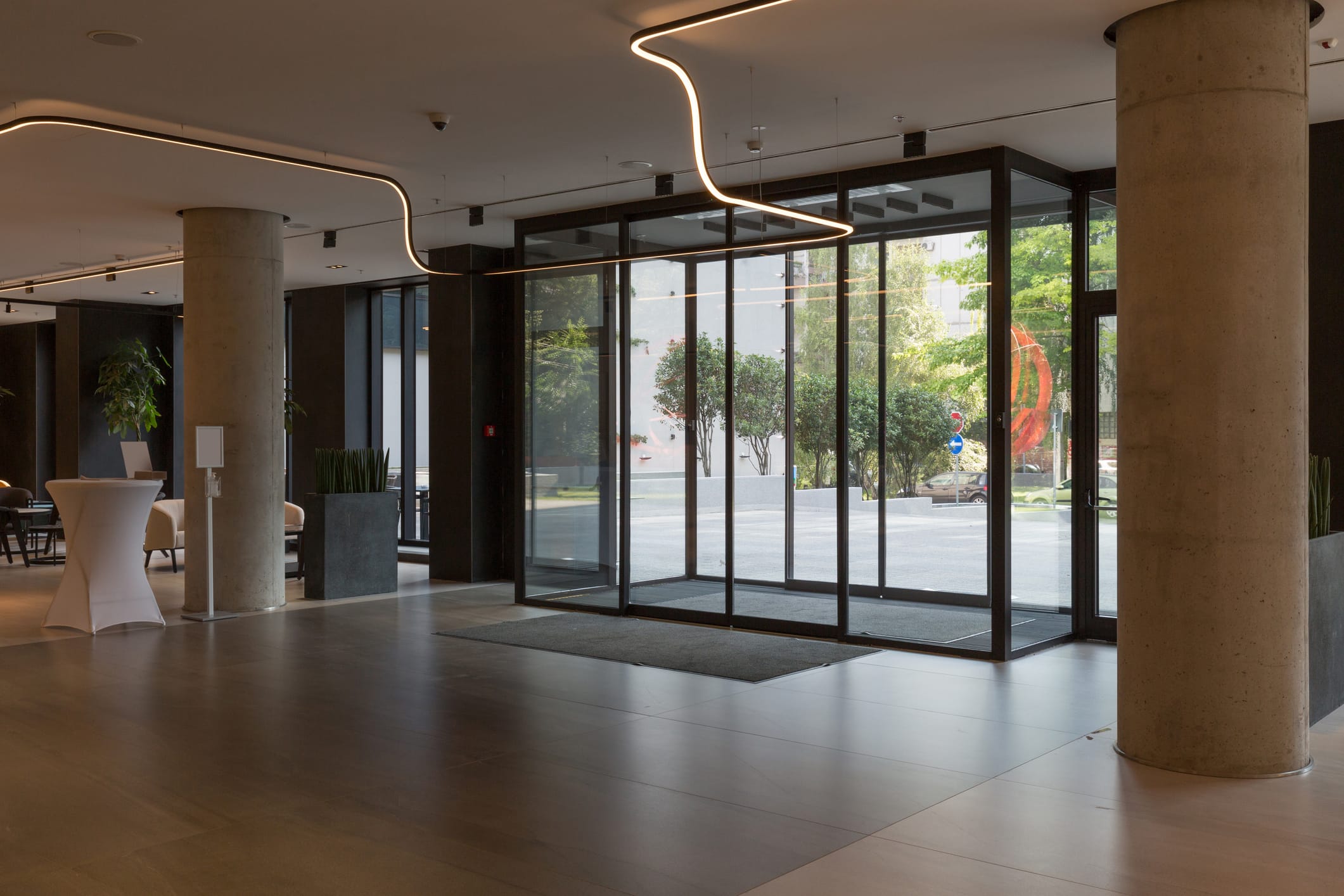
Storefront vs Entrance vs Overhead Doors
- Storefront systems (aluminum-framed glass walls) carry NOAs covering mullions, glazing, and anchorage. Field modifications—like adding a sidelight not on the NOA drawing—can fail inspection.
- Entrance doors (single or pairs within storefront) have separate NOA limits for door size, hardware, and glazing kits.
- Overhead/coiling doors at loading docks require their own impact approvals; do not assume the storefront NOA covers them.
Windows in the same facade may reference hurricane impact windows with distinct approval numbers. Maintain a facade schedule listing each opening type and its approval ID.
Impact Rating vs Water Penetration
Impact resistance means the assembly survives large and small missile impacts without creating openings that let wind pressurize the building. Water penetration resistance measures how much water passes through under driven rain conditions—critical for ground-floor retail and lobby entrances.
Reddit discussions in r/Miami often conflate ‘impact door’ with ‘waterproof.’ A product can be impact-listed yet still require proper thresholds, drainage, and maintenance to manage water. After storms, we frequently repair gasket and threshold failures that allowed interior damage despite intact glass.
When specifying replacements, ask for both design pressure (DP) rating and water penetration class relevant to your exposure and floor level.
Miami-Dade County Approved Windows and Doors: Finding Valid Products
Search interest in miami dade county approved windows reflects ongoing need for verified products. Use Miami-Dade Product Control’s public search to validate NOA numbers on submittals. Cross-check label markings on installed products against the NOA drawing dimensions.
Commercial Windows & Doors already ranks for related terms because we install listed systems and document approvals for property files. If your architect spec references an expired or superseded NOA, update before procurement—lead times on compliant systems can run 6–12 weeks.

Pre-Storm Inspection Checklist for Property Managers
Before hurricane season (ideally by June 1), walk every rated opening:
Pre-Storm Tasks
Verify NOA labels or product approval stickers are present and legible on frames or glass.
Inspect impact glazing for cracks, delamination, or edge seal failures.
Check door hardware, pivots, and closers for corrosion—common in coastal Miami properties.
Confirm removable storm panels or shutter systems (if used) are tagged, stored, and fit-tested.
Clear drains and thresholds at low-lying storefronts to reduce water infiltration.
Photograph current conditions for insurance baseline documentation.
Schedule professional service for binding doors, broken operators, or compromised gaskets through Miami commercial door repair.
Retrofit and Replacement Options
Full replacement is required when products lack valid HVHZ approval or exceed damage thresholds after impact. Retrofit film and aftermarket ‘impact’ solutions without NOA are not substitutes in HVHZ commercial work.
Partial retrofits—like hardware upgrades within the same NOA configuration—may be viable. Engineering review determines if modified openings remain within approved size limits.
Capital planning tip: bundle storefront, entrance, and window replacements to reduce mobilization cost and align tenant disruption.
Cost Drivers for Impact Commercial Openings
Sticker shock is real on Reddit for good reason. Drivers include: opening size, floor level (higher design pressures), glazing type (laminated vs insulated), anchorage corrections to aged concrete, after-hours installation, and permit/engineering fees in Miami-Dade.
Ballpark new storefront entrance assemblies in HVHZ often start in the mid four figures per opening and scale to five figures for full facade segments—always get itemized quotes with NOA numbers cited.
Deferred maintenance increases storm damage severity; pre-season gasket and hardware service is cheaper than post-storm emergency board-ups.
Documentation and Insurance Considerations
After Hurricane Irma and Ian, insurers scrutinized whether damaged openings met approved specifications. Maintain PDF copies of NOAs, as-built photos, and contractor invoices in your property file.
If a tenant or vendor modifies an opening without approval, document corrective action—unapproved changes can complicate claims.
Work with licensed, insured contractors who pull permits when required and provide close-out packages.
Create a spreadsheet indexed by NOA number, manufacturer, size limits, and install date. When a product is superseded, note the successor NOA for future replacements so architects do not specify obsolete models.
Glazing Contractors and Door Vendors on HVHZ Specs
On renovation projects, require structural engineers to confirm anchorage capacity before ordering supersized storefront systems. Miami-Dade wind maps and exposure categories change effective design pressure—do not copy-paste specs from a prior project without review.
Glazing contractors and door vendors should attend the same pre-install meeting to align head details, thresholds, and flashing. Siloed trades cause water intrusion that Reddit users often blame on ‘bad impact glass’ when the real issue is installation sequencing.
Specify who owns the watertight warranty—the glazing subcontractor, door vendor, or general contractor—and require that chain in your contract to avoid finger-pointing after the first tropical storm.
Post-Storm Assessment Workflow
After a named storm, document each opening with timestamped photos before cleanup crews remove evidence insurers may need. Note whether damage is impact-related (missile strike) or water-related ( gasket failure)—coverage may differ.
Temporary protection must not drill into unapproved frame locations that void NOA compliance. Use board-up methods your insurer and AHJ accept.
Schedule professional assessment within 72 hours on critical egress doors; delayed repairs extend business interruption and tenant safety exposure.
Maintain a roster of pre-approved commercial vendors before storm season—Miami Reddit threads show property managers losing days searching for qualified glaziers while openings remain unsecured.
Labeling and Product Markings Explained
Impact products typically show manufacturer name, NOA or FPA number, and maximum size. Compare field markings to submittal PDFs—if markings were never applied during install, documentation gap becomes an inspection and insurance problem.
Keep a laminated quick-reference sheet for security staff: photos of compliant labels vs common aftermarket violations (non-listed film, drilled frames, missing screws at approved spacing).
When products are superseded, Miami-Dade publishes revision dates—subscribe to updates for manufacturers you rely on so capital plans use current models, not discontinued lines.
Planning an impact upgrade or pre-storm service? Contact us for documented NOA-compliant solutions. Explore hurricane impact doors and hurricane impact windows for product options.