
When it comes to protecting commercial spaces, fire-rated doors are more than just a code requirement—they’re a frontline defense against the rapid spread of fire and smoke. Though often associated with institutions like schools or hospitals, these doors are crucial across all types of commercial buildings: offices, warehouses, retail centers, and multi-tenant facilities.
In this guide, we’ll break down what makes a door fire rated, where are fire doors required, when are fire doors required, and how to choose the right one for your facility.
Key Takeaways
- Fire-rated doors are required in commercial buildings wherever walls are designed to resist fire—this includes stairwells, corridors, utility rooms, and mixed-use spaces.
- Not all doors need to be rated, but knowing what doors need to be fire rated can prevent code violations and improve occupant safety.
- Exterior door fire rating requirements apply when doors are near property lines or other high-risk exposure points.
- Ratings vary: from 20-minute doors in corridors to 90- or 180-minute doors in stairwells and mechanical spaces.
- Always look for labeled, certified doors—improper or unlabeled installations may not meet code or pass inspections.
- We proudly service all of South Florida, offering compliant, professional fire-rated door solutions.
What Are Fire Doors Designed to Do?
Let’s start with the basics: what are fire doors designed to do?
Fire-rated doors are engineered to slow the advance of flames and smoke during a fire. Their role is to buy time—time for evacuation, time for emergency response, and time to limit structural damage. This delay can mean the difference between a minor disruption and a catastrophic loss.
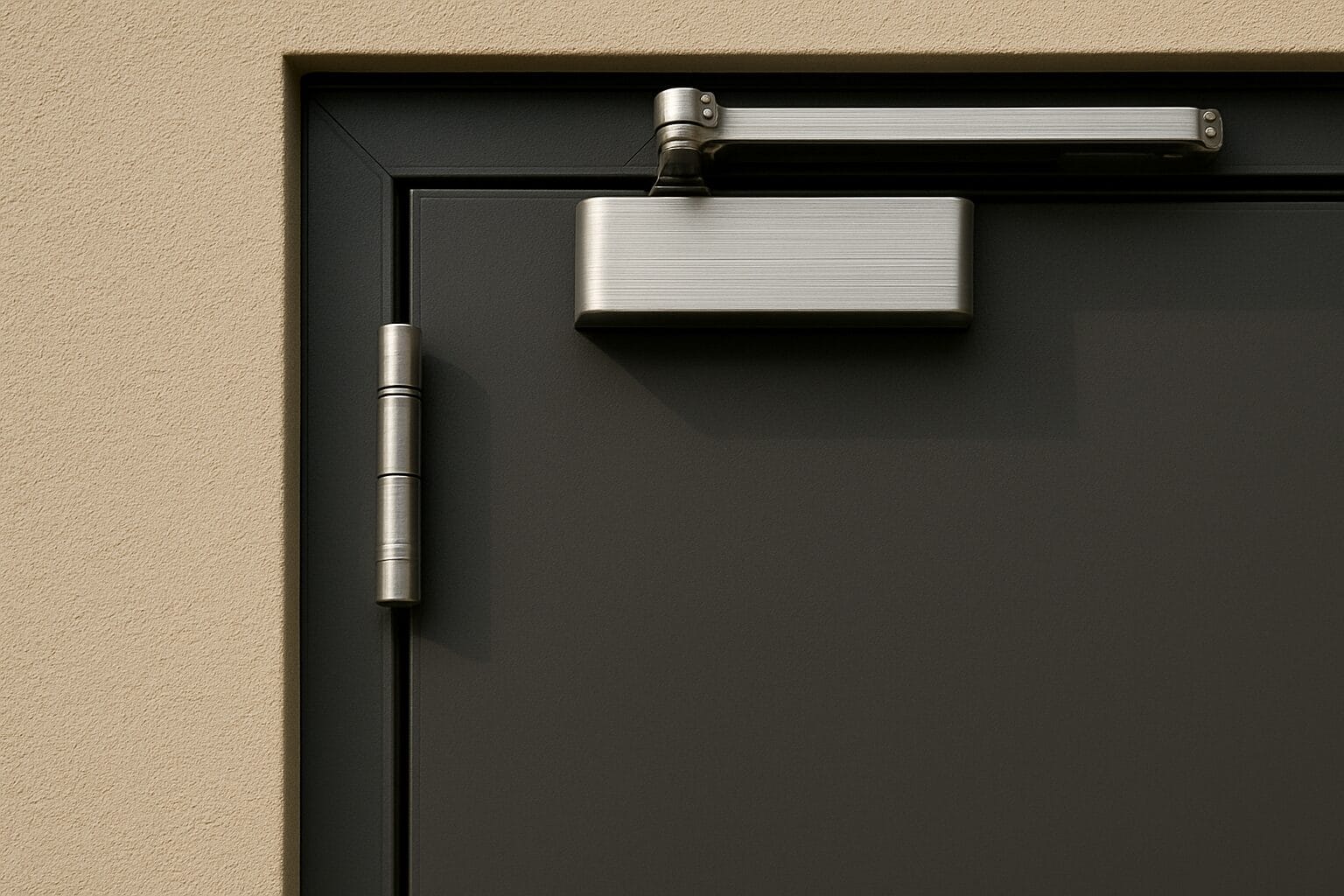
They’re rated in durations—20, 45, 60, 90, or 180 minutes—and must be part of a complete, tested system: door, frame, hardware, seals, and closing mechanisms.
What Makes a Door Fire-Rated?
What makes a door fire rated goes beyond its material. A compliant fire door must:
- Exit stairwells
- Corridors and egress paths
- Mechanical, electrical, and IT rooms
- Areas storing flammable or hazardous materials
- Separation points between different uses (e.g., a warehouse and office space)
In stairwell enclosures, which type of fire door is commonly used? You’ll typically find 90-minute rated steel doors, designed to resist fire and smoke under pressure for extended periods.
Are Fire-Rated Doors Required in Commercial Buildings? What Type Is Needed?
Now to the central question: where are fire doors required in commercial buildings—and which type of fire-rated door fits each space?
These placements are guided by the International Building Code (IBC), local amendments, and fire safety best practices. Here’s a more detailed breakdown:
Doors in Fire-Rated Walls or Corridors
- Required Fire Rating: 20- to 90-minute doors depending on wall rating and corridor use
- Type: Solid-core or steel door with smoke seal and self-closing device
- In corridors that serve as primary egress routes or are part of a rated hallway system, the doors must maintain the wall’s integrity. 20-minute doors are common in low-occupancy corridors, while 45- and 60-minute doors are used in higher-traffic or hazardous-use buildings.
Horizontal Exits (e.g., between wings or fire zones)
- Required Fire Rating: 90-minute rated door
- Type: Fire-rated double door or single swing door with panic hardware
- Horizontal exits are often used in hospitals, offices, or large open commercial buildings to create a protected escape route without leaving the building. They often require pairs of doors with a fire-resistance rating and clear egress widths.
Occupancy Separations (e.g., restaurant to retail space in a mall)
- Required Fire Rating: 60- or 90-minute door depending on the occupancy class difference
- Type: Steel or composite door with closer, latch, and optional vision panel
- When different uses exist in the same building—like a gym next to a café or an office above a storage facility—fire-rated assemblies must isolate each space. These doors must resist fire long enough to keep one side protected.
Elevator Lobbies and Shafts
- Required Fire Rating: 1.5-hour (90-minute) door
- Type: Hollow metal door with fire-rated vision panel
- To stop smoke and flames from rising between floors, elevator lobbies require rated doors with optional glazing. Doors must be positively latched and self-closing. Glass inserts, if used, must meet the same rating as the door.
Interior Stairwells and Vertical Exits
- Required Fire Rating: 90-minute rated door
- Type: Hollow metal door with self-closing hardware
- These doors are essential for keeping stair towers smoke-free and accessible for evacuation. They must be fire-rated and smoke-rated (labeled as S-rated) and include fire-latching hardware.
Mechanical, Electrical, and IT Closets
- Required Fire Rating: 45-minute or 1-hour rated door (depending on occupancy and room hazard)
- Type: Solid-core or steel door with rated hardware
- These rooms often contain high-voltage systems, fuel-burning equipment, or flammable storage. Doors should be minimum 45 minutes in low-risk areas and up to 1 hour in high-risk or large equipment rooms.

When are Fire Doors Required?
So, when are fire doors required?
Any time a wall is constructed to resist fire—whether it’s a stairwell, exit corridor, or a divider between uses—the doors placed in that wall must meet the same fire resistance level. Common triggers include:
- High-occupancy buildings
- Locations with hazardous or flammable materials
- Mixed-use structures with differing occupancies
- Buildings with interconnected floors or large floorplates
Always check with your local building department to ensure you’re following the most updated codes. Whether you’re building a new home or renovating an existing one, compliance with fire door requirements is not just about passing inspection—it’s about protecting lives.
Do Exterior Doors Need to Be Fire Rated?
Do exterior doors need to be fire rated in commercial properties?
Yes—when they are part of a fire-rated wall assembly or located close to property lines. These doors must prevent fire from transferring between adjacent buildings or from exterior fire hazards (like a loading dock or trash enclosure).
So, are all exterior doors fire rated? No. But when code dictates, they must meet both fire and weather performance criteria.
Exterior door fire rating requirements generally apply when:
- The wall has a fire rating
- The door is within 10 feet of another structure
- The door opens into hazardous external zones

Choosing the Right Fire-Rated Door
Even in commercial spaces, appearance and function can go hand in hand. Fire-rated doors come in more than just plain steel.
Options include:
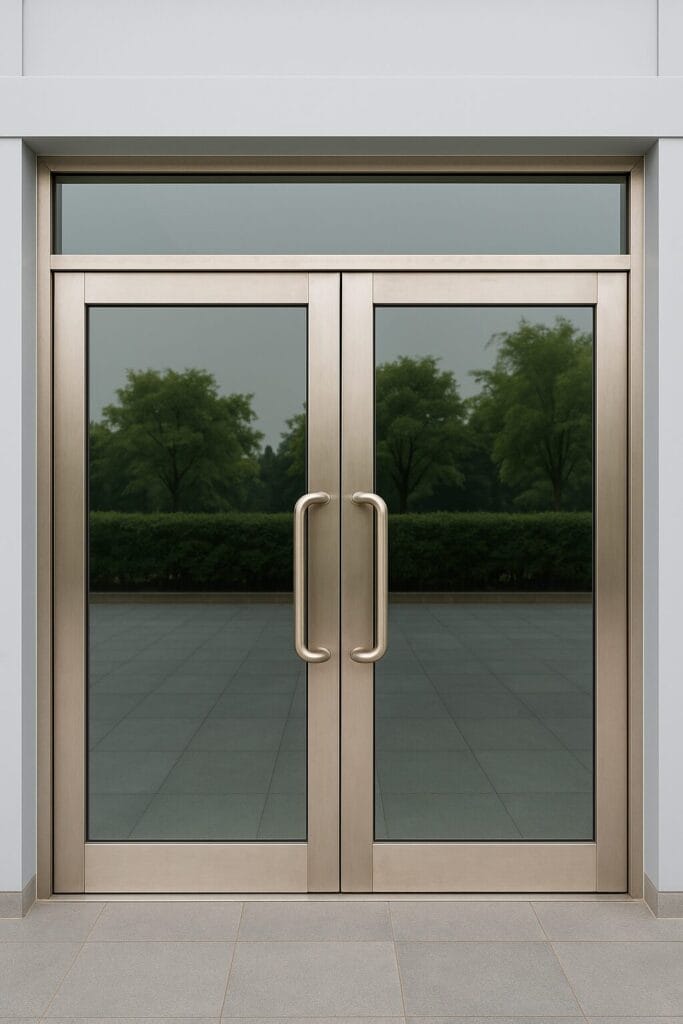
- Fire-rated glass vision panels
- Veneer wood finishes
- Powder-coated or stainless finishes
- Louvered doors (if code-compliant for air movement areas)
When specifying your door, consider:
- Required fire duration (based on wall rating and code)
- Material: Steel, solid-core wood, or composite
- Certifications: UL, Intertek, NFPA compliant
- Hardware compatibility: Closers, latches, and seals
- Location: Stairwell, lobby, exterior wall, etc.
Which Location Would Likely Be Protected by a Fire Door?
Examples of which location would likely be protected by a fire door in a commercial property include:
- Fire exit stairwells
- Electrical and IT closets
- Exit corridors
- Mechanical and boiler rooms
- Walls separating tenants or functions (e.g., office + storage)
Each one is vulnerable in a fire event—and code requires rated assemblies to block fire spread.
Understanding where fire doors are required in commercial buildings is essential to protecting your space and staying compliant. From stairwells to server rooms, each fire-rated door plays a role in slowing the spread, protecting lives, and limiting damage.
Whether you need a 20-minute door for a corridor or a 3-hour door for an equipment room, Commercial Windows & Doors is here to guide you through. Our expert team can help you select, supply, and install the right assemblies with precision—and we proudly service all of South Florida.