
Commercial door maintenance is one of the highest-ROI tasks a facility team can schedule—yet it is often deferred until a closer fails, a fire marshal cites a propped-open stairwell door, or a storm exposes corroded pivots. Search demand for commercial door maintenance reflects property managers building preventive programs that protect tenants, pass inspections, and control capital spend.
This checklist gives you monthly, quarterly, annual, and pre-hurricane tasks for hollow metal, wood, fire-rated, and storefront openings. Use it in your CMMS, share with janitorial vendors so they know what not to wedge open, and know when to call a licensed commercial door contractor versus handling tasks in-house.
South Florida adds hurricane prep and corrosion checks that inland maintenance guides skip. Treat this as a living document—attach your property-specific NOA register, fire door inventory, and vendor SLAs so your team executes consistently across shifts and seasons.
Key Takeaways
- Monthly visual walks catch wedged doors, leaking closers, and binding hardware before they become egress failures.
- Quarterly operational tests should include full-cycle closers, panic hardware actuation, and operator safety sensors.
- Annual fire door inspections under NFPA 80 require documented checks of labels, gaps, latching, and self-closing performance.
- Pre-hurricane tasks in South Florida include gasket inspection, impact glass checks, and shutter/panel fit tests before June 1.
- Keep digital logs with photos for AHJ, insurance, and ownership reporting.
- Licensed pros should handle fire-listed repairs, impact glass, and structural frame issues.
Why Commercial Door Maintenance Matters
Doors are active life-safety components—not static walls. A single failed closer on a fire stairwell or a binding panic exit during an evacuation creates liability no checklist can undo after the fact.
Preventive maintenance extends hardware life, reduces emergency service premiums, and keeps tenants confident in building management—especially in Miami’s corrosive coastal environment.
Monthly Maintenance Tasks
Walk all public and egress doors; remove wedges and props; report any door that does not latch or self-close.
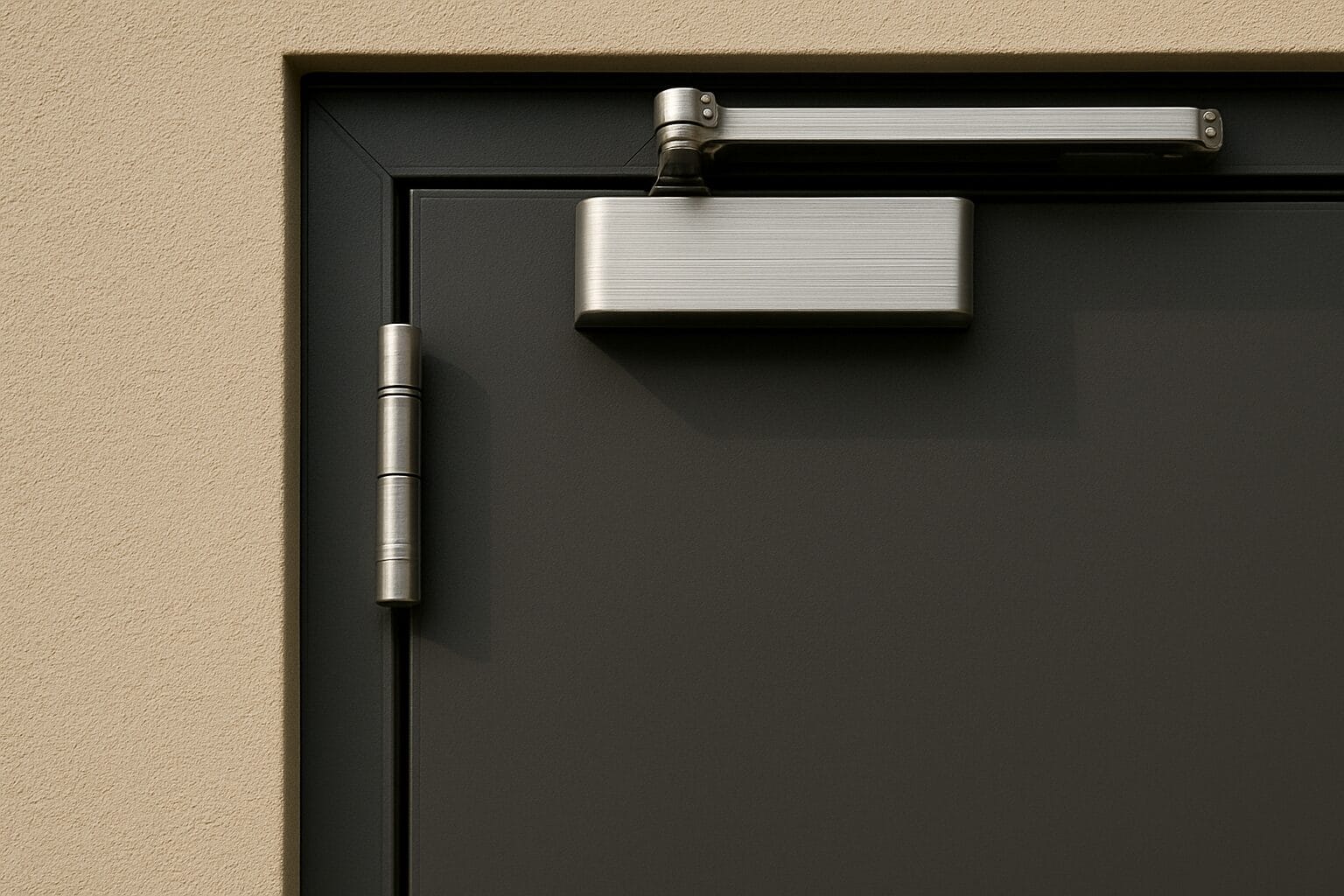
Look for oil leaks on closers, cracked cover plates, and loose hinge screws.
Check automatic operators for slow response, obstructions, and damaged safety stickers.
Verify exit signage visibility and that panic hardware is not blocked by furniture or displays.
Note corrosion on thresholds, pivots, and exterior frames; schedule service before failure.
Quarterly Maintenance Tasks
Cycle-test panic hardware: full push-bar travel and latch retraction on every exit device.
Adjust closers for full latch from open position; verify ADA opening force where applicable.
Inspect weatherstripping and bottom sweeps; replace if daylight or water intrusion visible.
Test hold-open devices (if present) for proper release when alarm is triggered—coordinate with fire alarm vendor.
Lubricate hinges with appropriate commercial lubricant; avoid over-application that attracts dirt.
Annual Maintenance and NFPA 80 Fire Door Inspection
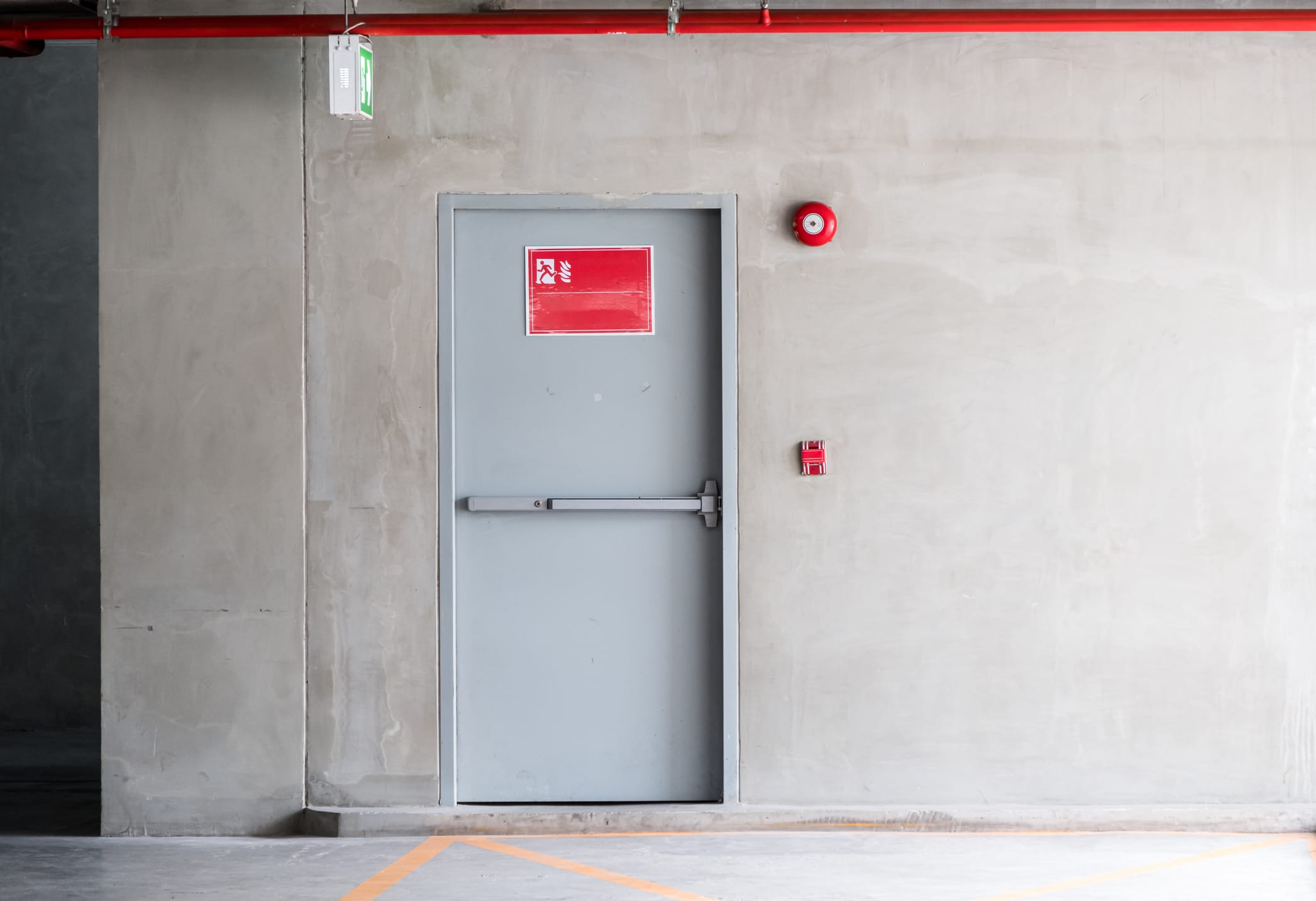
Fire door assemblies require annual inspection and testing by qualified personnel where NFPA 101 applies. Items include:
Annual Fire Door Checklist
Verify certification labels on door and frame are legible.
Measure door-to-frame gaps within manufacturer limits.
Confirm positive latch and self-closing from full open.
Inspect glazing beads and vision lites for listed components.
Check for field modifications (extra holes, unlisted locks).
Document deficiencies and repair with listed parts only.
Our fire-rated doors service line supports inspection and correction.
Pre-Hurricane Season Tasks (South Florida)
Complete before June 1 each year for Miami-Dade, Broward, and Palm Beach properties:
Pre-Hurricane Checklist
Inspect impact glazing for cracks or delamination; schedule replacement before season.
Verify NOA/FPA documentation is on file for each rated opening.
Test removable shutters or panels for fit and hardware integrity.
Clear threshold drains; replace worn gaskets at ground-floor storefronts.
Tighten pivot sets and header screws; corrosion treatment on coastal properties.
Photograph baseline conditions for insurance.
Coordinate with hurricane impact doors specialists for impact system service.
In-House vs Professional Service
In-house appropriate: visual walks, removing door stops, minor strike plate alignment, reporting issues, CMMS logging.
Call a pro: fire door repairs, panic hardware replacement, closer sizing changes, impact glass, storefront pivot rebuilds, automatic operator electrical faults.
Using unlisted parts on fire or impact openings voids compliance—budget for qualified commercial service.
Documentation and CMMS Integration
Create asset records per opening: location, door type, fire/impact labels, hardware models, last service date, photos.
Use inspection forms that match NFPA 80 fields for fire doors and internal checklists for non-rated doors.
Export PDF reports quarterly for ownership and insurance files.
Tag recurring failures for capital replacement planning next fiscal year.
Downloadable-Style Maintenance Schedule
- Monthly: visual walk, remove wedges, report latch/closer issues.
- Quarterly: panic hardware test, closer adjustment, weatherseal check, operator safety test.
- Annual: NFPA 80 fire door inspection, full hardware inventory refresh, ADA force check on public doors.
- Pre-June 1: hurricane prep for impact openings, shutter test, gasket and pivot service.
Print this schedule or import into your CMMS as recurring work orders assigned to facilities staff and licensed vendors.
When Maintenance Signals Replacement
Repeated closer failures from door sag, hinge pull-through, frame rust, or delaminating cores indicate replacement—not another band-aid adjustment.
Plan replacements in dry season to avoid hurricane rush pricing and lead times.
Commercial door repair provides portfolio assessments for multi-property owners.
Training Building Staff and Vendors
Brief janitorial teams: never wedge fire doors, never remove closers for ‘easier cleaning access,’ and report binding doors immediately. Many inspection failures start with well-meaning staff props.
Deliver a one-page egress map highlighting doors that must remain operational 24/7. Post contact numbers for licensed commercial door service alongside fire alarm vendor info.
When tenants perform build-outs, require contractor submittals showing door modifications will not void fire or impact listings on adjacent openings.
Integrating Maintenance With CMMS and Compliance Audits
Map each door asset to QR codes on frame rabbets (where AHJ allows) so technicians pull history on site. Link work orders to NFPA 80 checklist fields for fire doors and custom fields for impact NOA numbers on exterior openings.
Before joint commission or insurance audits, export six months of door-related work orders to demonstrate proactive compliance—not reactive panic fixes.
Benchmark your program against BOMA or IFMA preventive maintenance guidelines; even informal benchmarking improves ownership reporting.
Assign ownership: a named facilities manager plus a licensed vendor partner. Programs fail when ‘doors’ sit on a shared checklist with no accountable owner.
Seasonal Maintenance Calendar for South Florida
- January–March: dry-season closer adjustments and corrosion treatment.
- April–May: pre-hurricane impact and gasket inspection; order long-lead parts.
- June–November: post-storm assessments after advisories; weekly egress checks during active occupancy peaks.
- December: year-end capital planning from maintenance logs; budget replacements flagged during annual fire door inspection.
Sample Maintenance Log Fields
Record for each opening: building ID, floor, door ID tag, type (HM/wood/storefront/fire/impact), manufacturer, rating labels, hardware models, last inspection date, findings, corrective action, technician name, and photo links.
Flag doors with repeat findings three quarters in a row for capital replacement review—even if they still ‘work’ today.
Share redacted summaries with ownership quarterly; transparency on door health prevents surprise five-figure replacement projects.
Include weather event notes when storms pass within 50 miles—latent damage often appears weeks later as closers leak or pivots grind.
Vendor Qualifications for Maintenance Programs
Select vendors with manufacturer certifications for major closer and panic brands used in your portfolio. Ask about stock levels in Miami—not all suppliers warehouse HVHZ impact parts locally.
Require COI naming your entity as additional insured for on-site work. Store W-9 and license copies once, not every ticket.
Annual maintenance agreements should specify response times for egress failures—SLA language matters for retail anchors with strict opening-hour requirements.
Want a maintenance walkthrough or fire door inspection? Contact us or schedule via Miami commercial door repair. Explore fire-rated and hurricane impact resources for rated openings.